
Back to industry insights
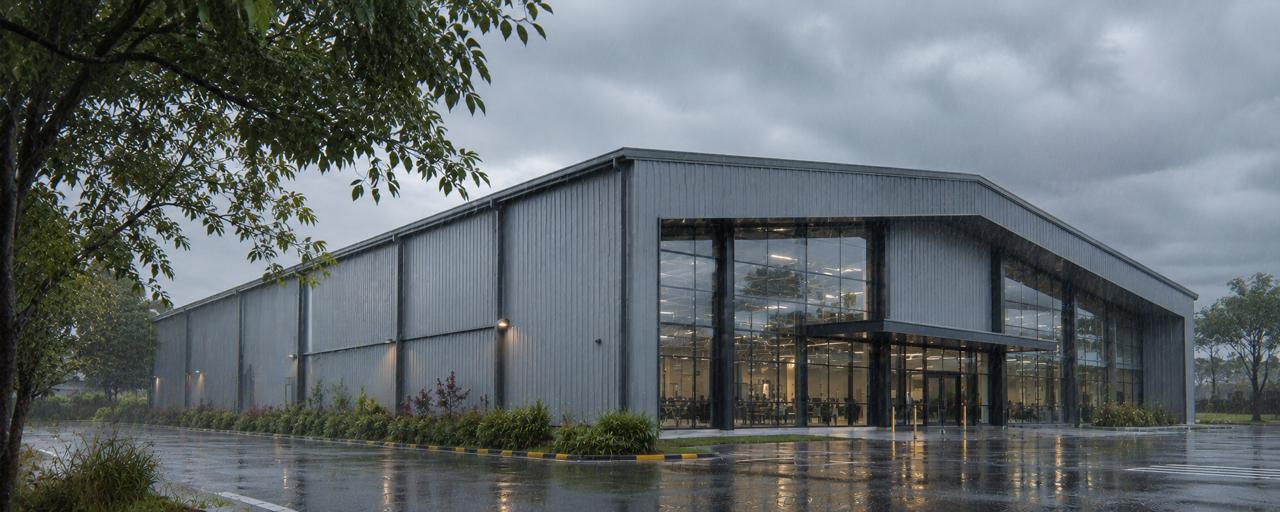
India's diverse geography exposes industrial buildings to some of the world's most challenging weather conditions from cyclonic winds along the coastline to seismic activity in Himalayan regions, heavy monsoon rainfall across central India, and extreme heat in desert zones. For businesses investing in industrial infrastructure, one question naturally arises: can Pre-Engineered Buildings truly withstand these conditions?
The short answer is yes—and here's why.
Unlike conventional construction where structural design often relies on standard sections and conservative assumptions, Pre-Engineered Buildings are engineered using advanced structural analysis software that models real-world load conditions specific to your project location. Every building is designed accounting for the exact wind speeds, seismic zone classifications, snow loads, and temperature variations applicable to its site.
This location-specific engineering approach means no two PEB structures are identical each is optimized for its environment from the very first design calculation.
Wind resistance is among the most critical performance requirements for industrial buildings across India, particularly in coastal states like Gujarat, Odisha, Andhra Pradesh, and Tamil Nadu that face annual cyclone risks.
Pre-engineered buildings in India are designed in accordance with IS 875 (Part 3), India's wind load standard which classifies wind zones and specifies design pressures for different regions. Our structural frames are engineered to resist both positive and negative wind pressures, addressing:
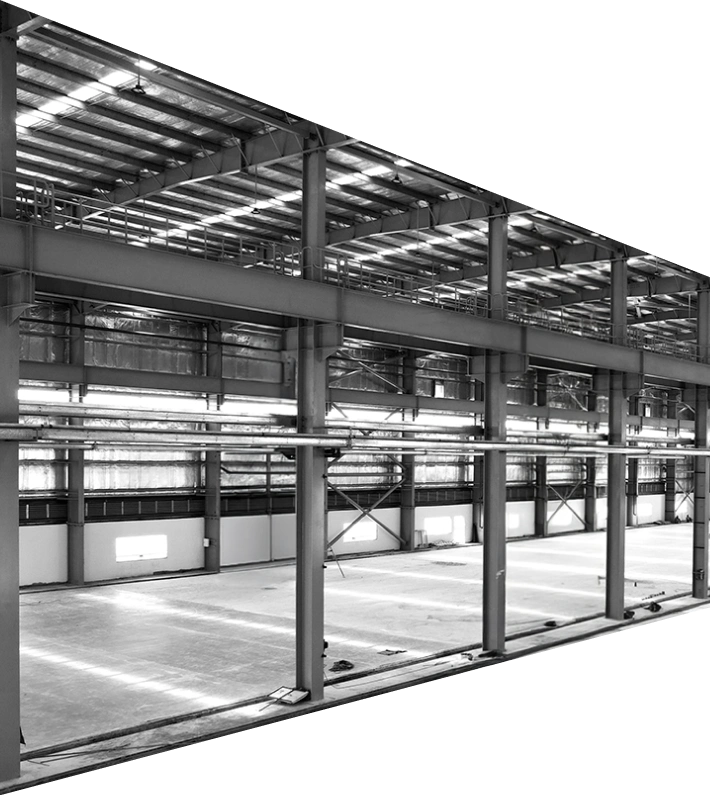
The rigid frame system at the heart of every Pre-Engineered Building provides inherent lateral stability, while carefully designed connections between primary frames, purlins, and cladding create a unified structural system that distributes wind forces efficiently throughout the building.
India is divided into four seismic zones: Zone II through Zone V, with significant portions of the country classified as moderate to high seismic risk. Seismic performance is therefore a non- negotiable design requirement for Pre-Engineered Buildings in India.
Steel's natural ductility gives PEB structures an inherent advantage in earthquake conditions. Unlike concrete, which is brittle and prone to sudden failure, steel bends and absorbs seismicenergy without catastrophic collapse. This ductile behavior provides crucial warning time during seismic events.
Our pre-engineered buildings are designed per IS 1893, India's seismic design standard, incorporating:
India's climate diversity tropical humidity, arid desert heat, cold mountain regions, and everything in between demands buildings that adapt rather than merely survive. Pre-Engineered Buildings address climate adaptability through flexible design integration.
Insulation systems using fiberglass or rockwool dramatically reduce heat transfer, keeping interiors cool without excessive air conditioning. Ridge ventilators and turbo vents promote natural airflow, further reducing thermal buildup.
Pre-Engineered Buildings can incorporate advanced Standing Seam Roofing (SSR) systems to provide enhanced protection against heavy rainfall and water infiltration. Our INTERLOCK 360™ Standing Seam Roofing System features screw-less interlocking panels joined through a 360° mechanical seam, creating a continuous, weather-tight roof surface. Its concealed fastening arrangement reduces exposed points through which water could enter. The 3-inch-high ribs facilitate faster rainwater drainage, while the seamed ridge cap provides additional weather protection at the roof apex. The movable clip system allows the roof to accommodate thermal expansion and contraction, helping preserve its integrity as temperatures change. Proper roof slope, detailing, sealant application and installation remain important to the overall performance of the roofing system.
Specialized protective coating systems including hot-dip galvanizing and chemical-resistant paints protect structural steel against salt-laden air and high humidity that accelerates corrosion in conventional structures.
Absolutely. The consistent quality achieved through factory manufacturing directly impacts weather performance. Every weld, coating application, and connection detail follows documented procedures with systematic inspection eliminating the field variability that creates weak points in conventionally built structures.
As IGBC-accredited PEB companies in India, we design and manufacture structures that don't just meet minimum code requirements they're built to perform reliably across decades of real-world weather exposure.
The performance of a roofing system is also influenced by the quality of its design, components, manufacturing and installation. Our SSR offering is supported by FM Approval testing for standing seam roof systems. FM Approvals is an independent third-party testing and certification programme that evaluates products and systems against defined property-loss-prevention standards, including standards relevant to roofing assemblies. This provides an additional point of reference when assessing roofing-system performance. The applicable approval, tested assembly, installation details and performance ratings should always be checked against the relevant FM documentation for the proposed project.
Yes. Every Pre-Engineered Building is designed per IS 875 (Part 3) accounting for the specific wind zone of your project location. This ensures the structure is engineered for actual local wind speeds rather than generic conservative assumptions.
Absolutely. Pre-Engineered Buildings are designed per IS 1893 seismic standards for all Indian seismic zones. Steel's natural ductility makes PEB structures particularly well-suited for high seismic zones, providing energy absorption and controlled deformation during earthquakes.
PEB roofing systems feature precision-engineered slopes, concealed fastener panels, and high-quality sealants that prevent water infiltration during intense rainfall. Factory-fabricated components with tight tolerances eliminate the joint gaps most vulnerable to monsoon leaks.
Yes. Experienced PEB companies in India offer specialized corrosion protection systems including hot-dip galvanizing and marine-grade coatings specifically engineered for coastal environments where salt-laden air accelerates structural deterioration.
Post-event inspections are recommended after major cyclones or earthquakes to verify structural integrity. However, well-engineered Pre-Engineered Buildings typically require minimal corrective maintenance after weather events due to their robust design, quality connections, and factory-applied protective coatings.